Working with Biblioteche di Roma, students from the Master's Program in Design for Children rethink children's libraries from the child's perspective and scale, designing spaces that foster autonomy, discovery and interaction.

Biblioteche di Roma: designing child-centered libraries
Didactical project - Master in Design for Children - IED Roma In collaboration with Biblioteche di Roma
Academic year
2025/2026
A child-centred library is not simply a library with smaller furniture. During the course led by architect Giovanni Fumagalli, students from the Master's Program in Design for Children explore how an entire environment can help children find their way around, choose a book, find a place to settle and gradually use the library more independently. Working with Biblioteche di Roma brings this research into direct contact with the practical needs of a public service designed for children, families and communities.
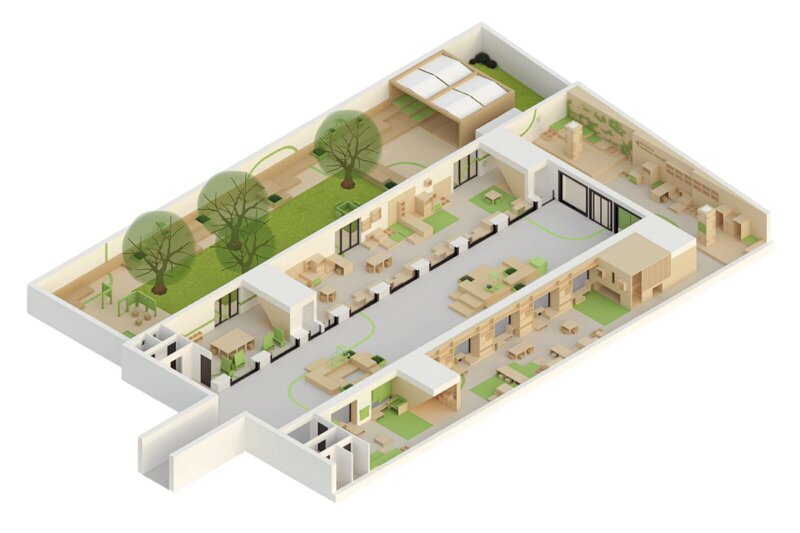
Proportions, circulation, furniture and book displays are therefore designed as parts of a single spatial system. Drawing on the Montessori principle of the prepared environment, students create legible and accessible spaces in which children can move and make choices independently, balancing settings for concentration, exploration and social interaction.
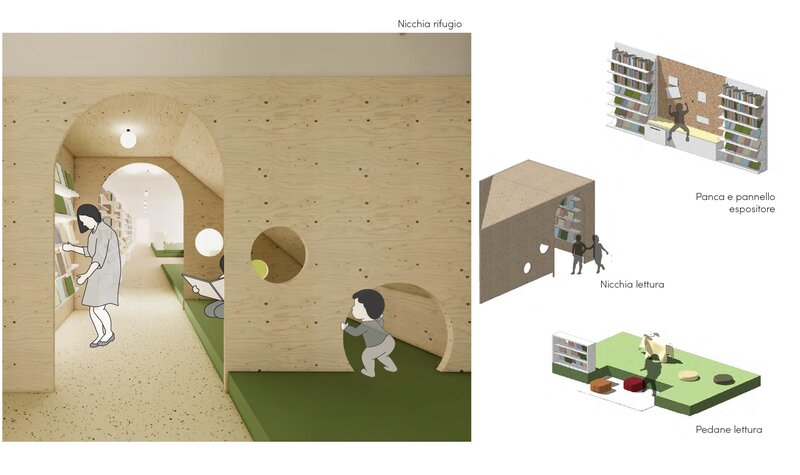
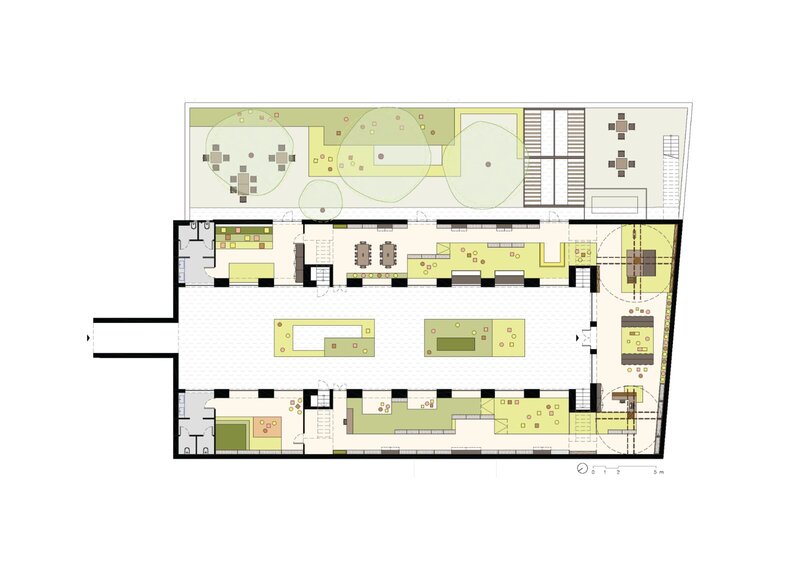
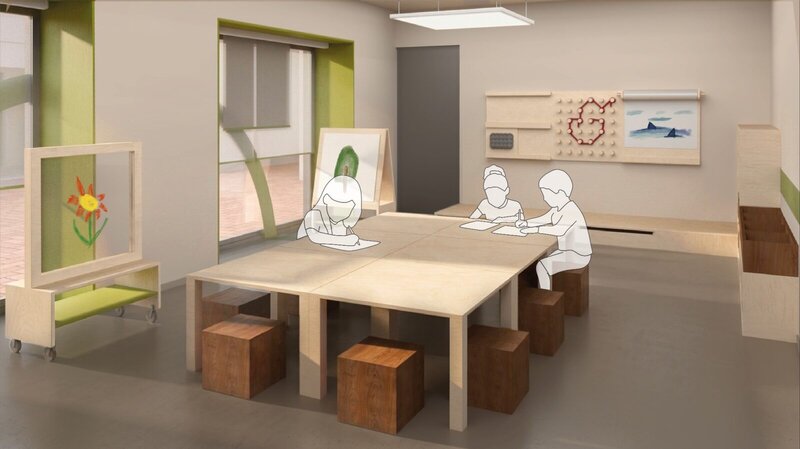
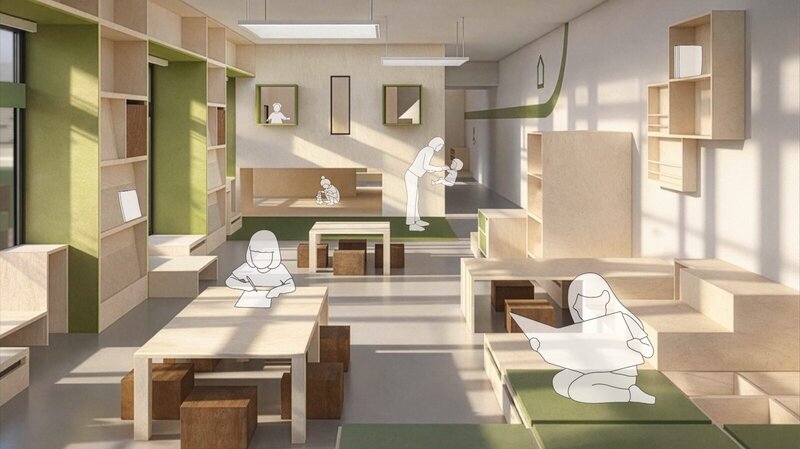
The resulting proposals offer different interpretations of these principles. Sheltered niches coexist with spaces for shared reading and group storytelling; platforms and stepped seating create different ways of inhabiting the space; workshops and play areas extend the possibilities of the library beyond reading. Shelving, seating and surfaces also shape the experience through careful consideration of scale, posture, book visibility, light and materials.
Students ultimately reinterpret the children's library as an educational landscape, where architecture and furniture do not prescribe behaviour but create the conditions for children to read, explore, meet others and gradually develop an independent relationship with both space and books.


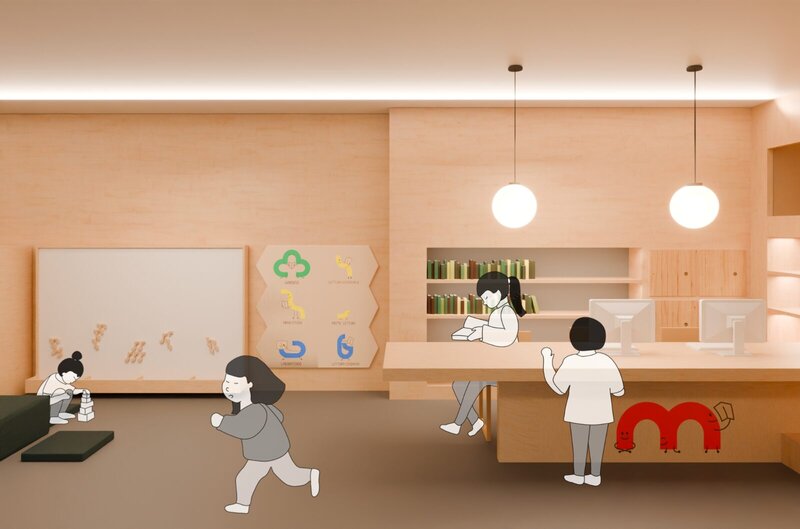
Project by A. Miranda and V. Robbe
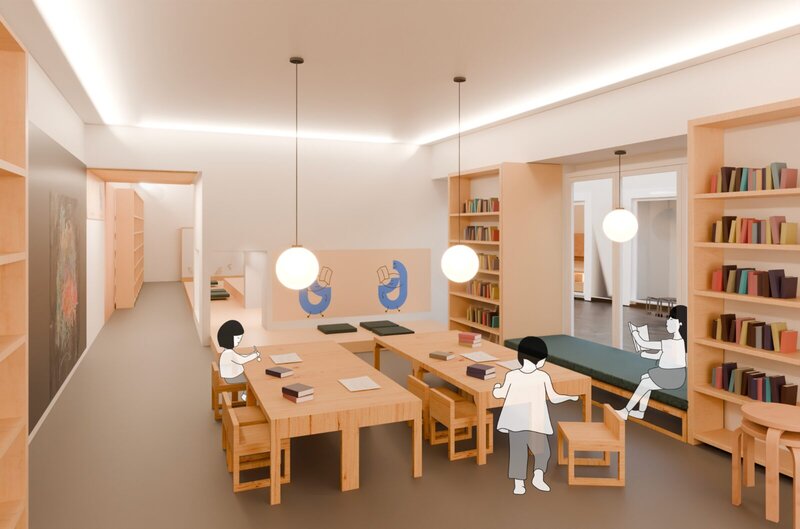
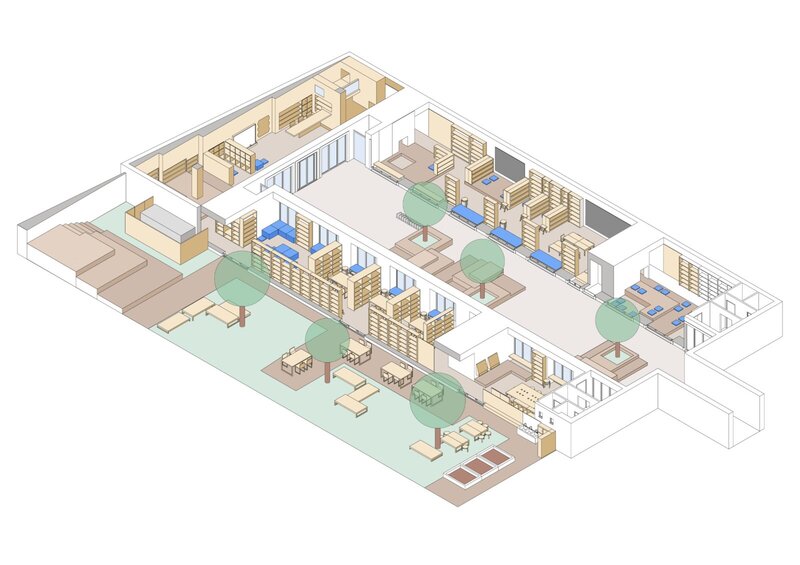
Projetc by M. Blefari and K. Ehigiator
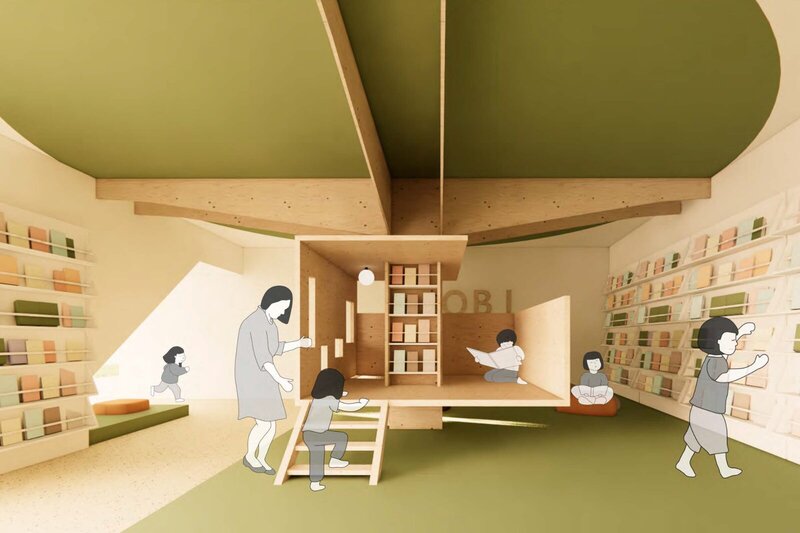
Project by R. Amore and F. Bertani
Project from the courses of
