A travelling museum designed in collaboration with FAO to introduce children to food, agriculture and sustainability.

FAO MuNe - Pop-up Museum
Thesis Project - Master in Design for Children - IED Roma In collaboration with FAO
Academic year
2025/2026
How can a museum reach beyond its walls and turn its content into educational experiences for new audiences? This is the challenge taken on by students of the Master's Program in Design for Children at IED Roma through a thesis project developed in collaboration with FAO - the Food and Agriculture Organization of the United Nations.
The brief draws inspiration from FAO MuNe - Food and Agriculture Museum & Network, which opened in Rome in 2025, and challenges students to design a pop-up museum for children aged 6 to 13. The aim is to make complex topics such as food security, biodiversity, sustainable agriculture and international cooperation accessible through play and interaction.
Following a visit to the museum and discussions with FAO staff, the students develop interactive, modular and easily transportable installations designed to adapt to different exhibition settings. Their proposals explore different approaches to learning, encouraging hands-on experimentation, creativity and active participation.
AgriCultures by Valeria Robbe
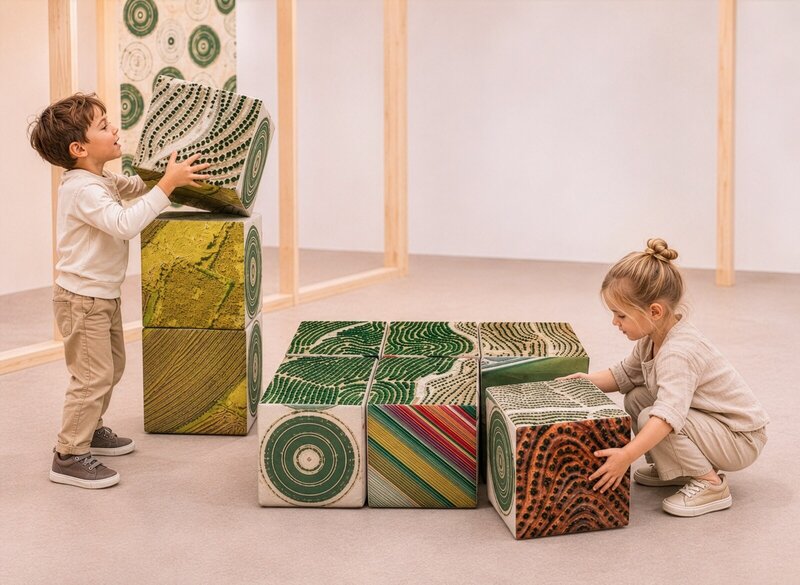
An installation exploring the connections between agriculture, landscape and cultural identity through two activities. In Landscape Puzzle, children combine soft cubes to recreate different agricultural landscapes. In Textile Atelier, they assemble and wear fabrics inspired by the patterns of the land. Both experiences are part of a modular, reconfigurable exhibition system.
Bite by Bite by Riccardo Amore
An interactive experience focused on food education and sustainability. Using magnetic discs representing different foods, children build their own meals on a large interactive scale, experimenting with nutritional balance. A digital system shows the environmental impact of their choices, while a creative workshop invites them to make personalised posters.
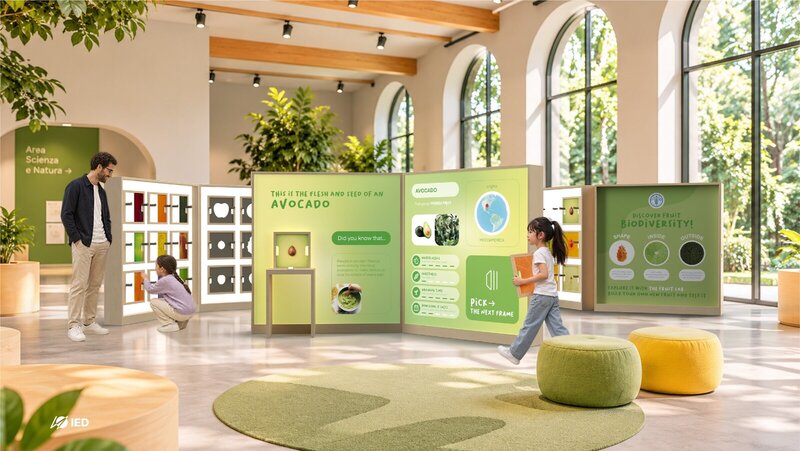
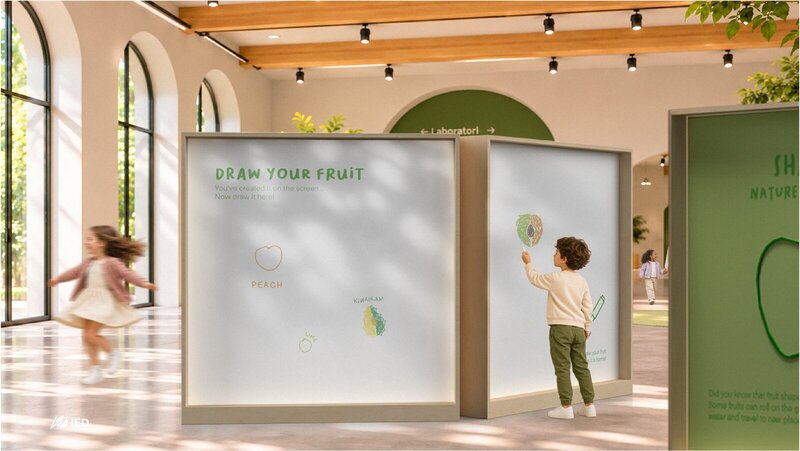
The Fruit Lab by Fabiola Bertani
A hands-on workshop dedicated to biodiversity, inviting children to discover the shapes, skins, flesh and seeds of nine different fruits. Using interchangeable frames and transparent surfaces, they can mix and match these features to invent new fruits, whether real or imaginary. Interactive screens and drawing activities complete the experience.
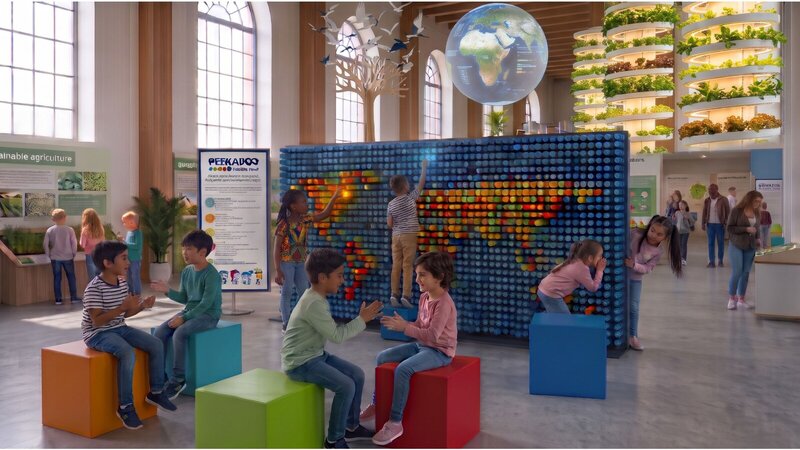
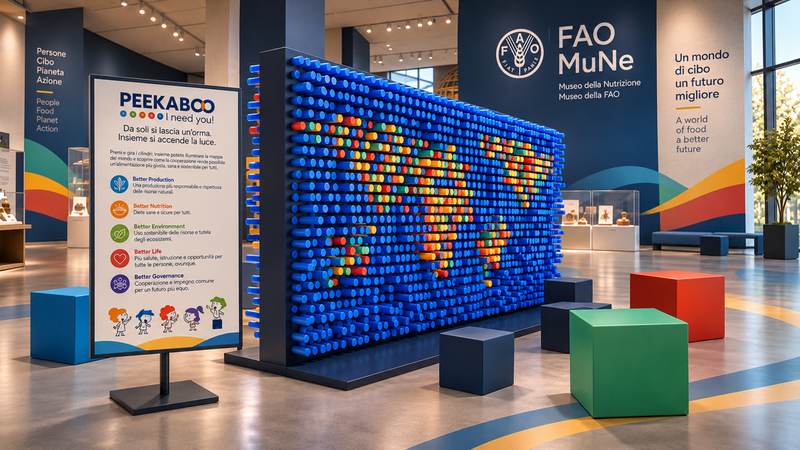
Peekaboo - I Need You! by Rita Bevini
An interactive wall made up of more than 1,200 colourful sliding cylinders that turns cooperation into a hands-on experience. Children interact with the structure from opposite sides, and when they coordinate their movements on the same cylinder, it lights up. The game makes the value of teamwork and solidarity visible, reflecting FAO's Four Betters principles.


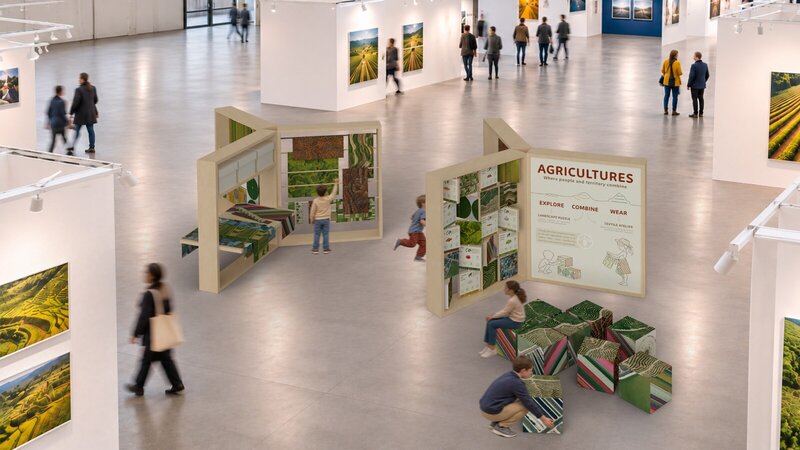
AgriCultures by Valeria Robbe
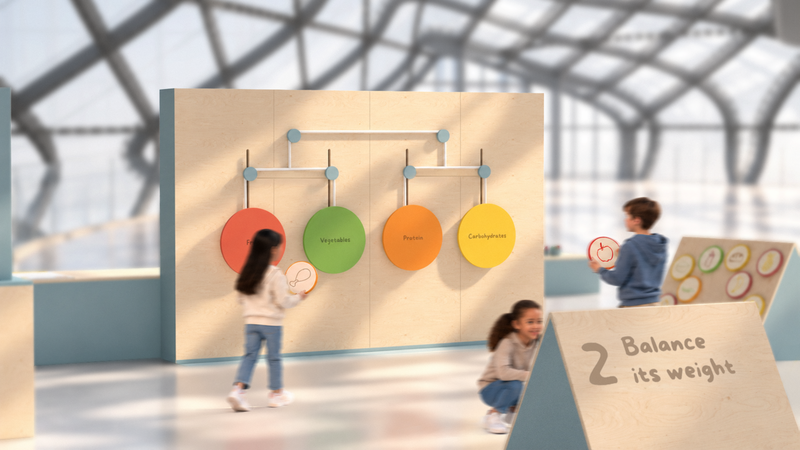
Bite by Bite by Riccardo Amore
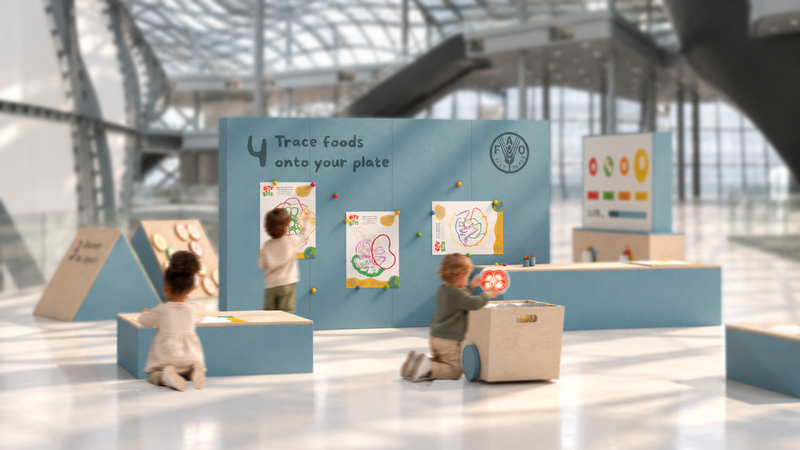
The Fruit Lab by Fabiola Bertani
Peekaboo - I Need You! by Rita Bevini
Project from the courses of
