What happens to the leftover materials after a manufacturing process? Gubia takes this question as its starting point, exploring new ways to repurpose woodworking waste through a collection of table lamps that brings together traditional techniques and material experimentation.

Gubia
IED Madrid - Student: Nina Cuny
Academic year
2025-2026
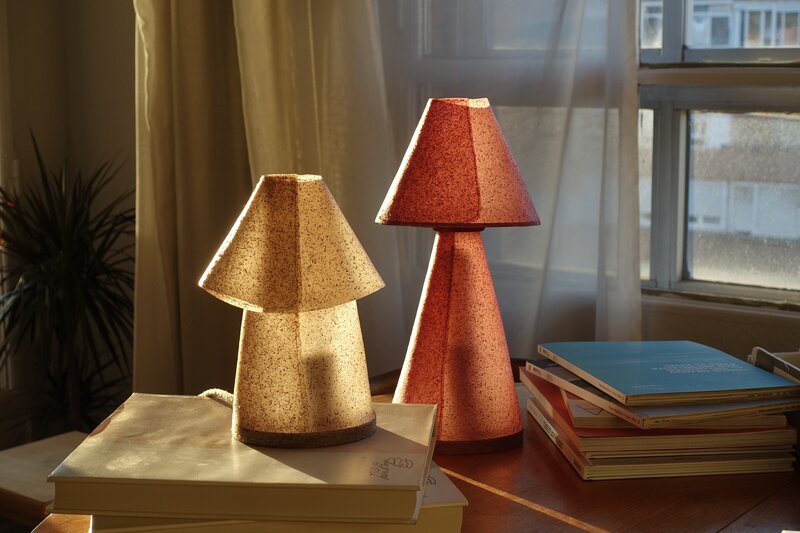
The project reuses the sawdust generated during woodturning and incorporates it into a flexible, plant-based biomaterial. This material becomes the main component of the lampshades, while the bases are crafted from solid turned wood. In this way, both elements share the same origin, establishing a direct connection between the manufacturing process and the finished product.
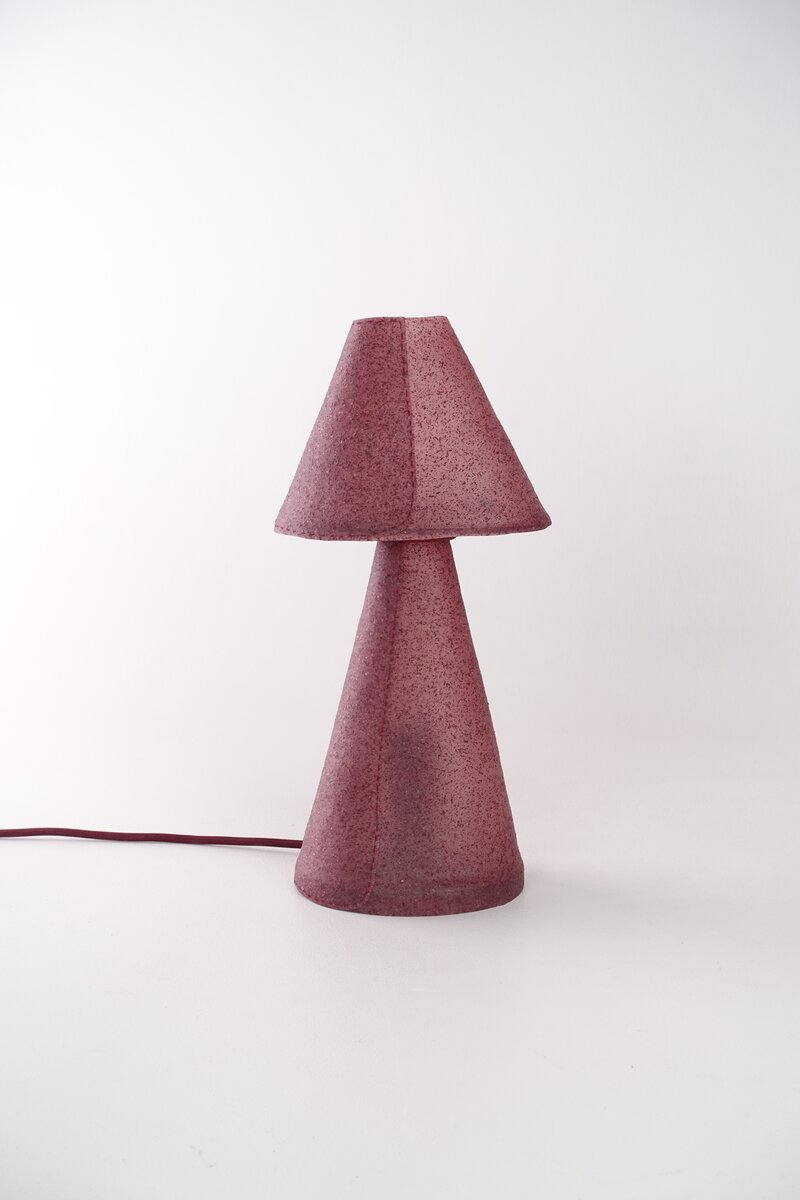
In terms of design, the collection draws inspiration from the New Vintage concept, revisiting the aesthetics of classic lighting through a contemporary lens. Timeless silhouettes meet unconventional materials, creating a contrast between the solidity of wood and the lightness of the lampshades.
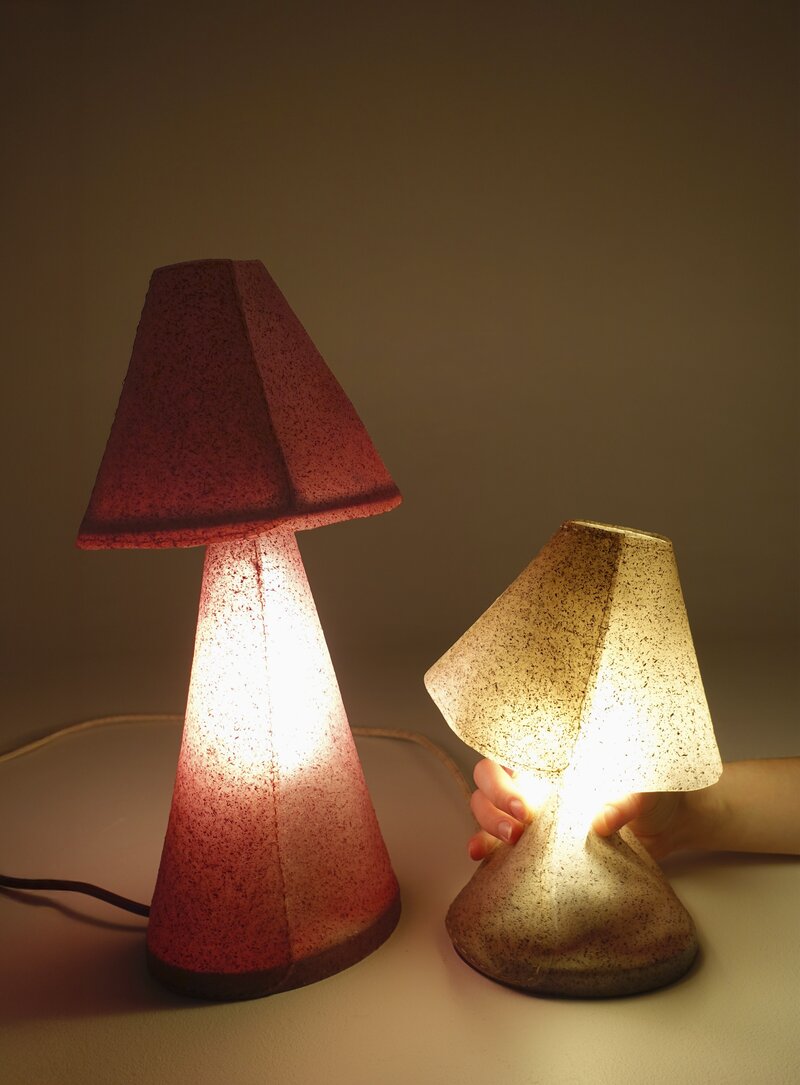
The latter are made from sheets of biomaterial, cut into specific patterns and joined together through hand stitching. The resulting surfaces retain the natural irregularities and distinctive characteristics of their composition, which become particularly visible when the lamps are switched on. Light filters through the material, revealing the wood particles and highlighting the variations in colour and texture of each shade.
Gubia thus highlights the aesthetic potential of reclaimed materials and the possibilities that emerge through their transformation. What would normally be discarded during manufacturing finds a second purpose, becoming part of an everyday object in which the origin of its materials also shapes its identity.
Nina Cuny is a student on the Bachelor's Degree in Product Design at IED Madrid, where she developed her Final Degree Project (TFG), GUBIA.


Project from the courses of


