Proposals by five multidisciplinary teams of students from the UPC, ESADE and IED Barcelona during Challenge Based Innovation 2022-2023.

News
Five innovative solutions to important health challenges
Date
20 December 2022
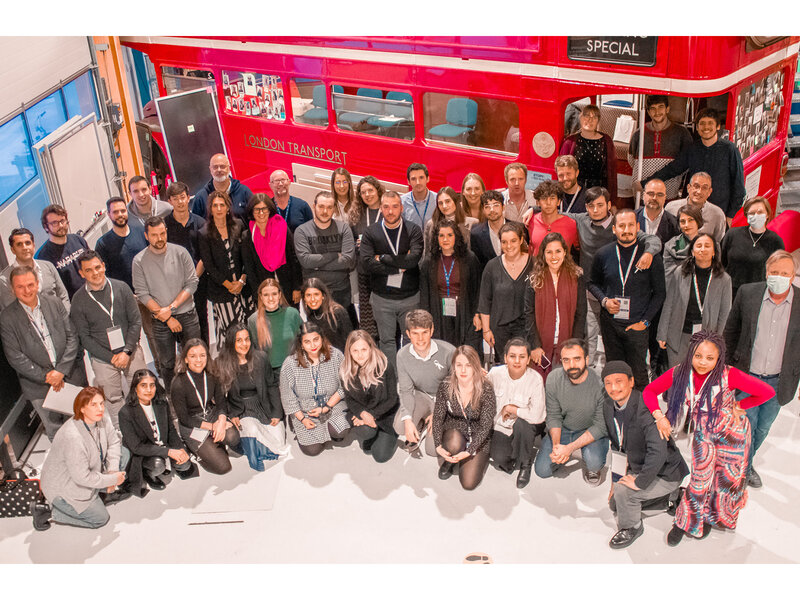
On 8 December, the IdeaSquare centre of the European Organization for Nuclear Research (CERN) in Geneva hosted the final presentations of the prototypes created by the students of the Universitat Politècnica de Catalunya – BarcelonaTech (UPC), the Higher School of Business Administration and Management (ESADE), and IED Barcelona participating in Challenge Based Innovation 2022-2023. This is the ninth edition of this programme, driven by IdeaSquare and the CERN Department of Innovation, in a bid to encourage multidisciplinary teams of students, with the collaboration of teachers and research staff from various entities, to work on new solutions for the future of humanity.
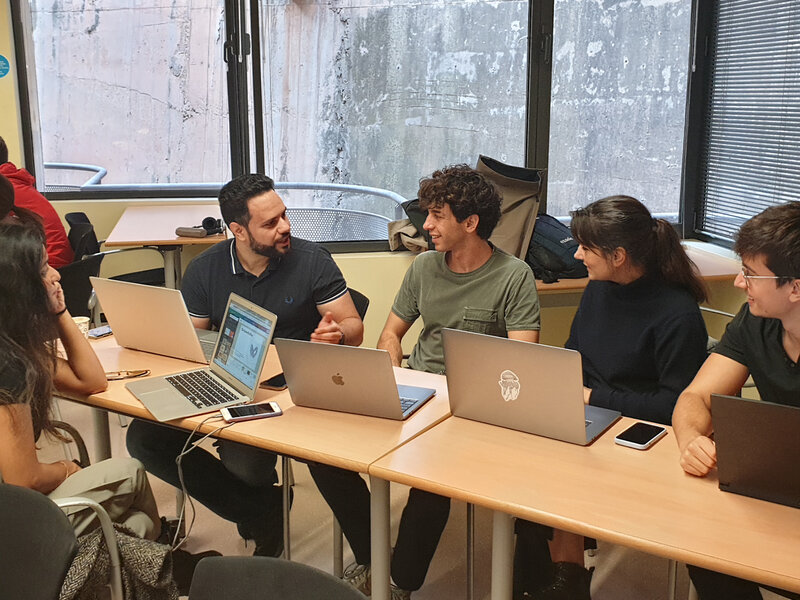
The teams used challenge-based learning techniques to generate five innovative solutions focused on improving health – one of the Sustainable Development Goals of the 2030 Agenda (SDG 3). The projects were developed with the help of disruptive technologies, detectors from the Attract programme led by CERN. Attract is an initiative funded by the European Union’s Horizon 2020 programme to create a sustainable innovation ecosystem in Europe focused on detector and imaging technologies to drive fundamental research, industrial applications and social innovation.
The projects presented are as follows:
- AI-based portable device, to make ophthalmological diagnoses. The Fleming team developed a low-cost wearable device for eye screening in developing communities in Sierra Leone using Attract technologies and AI-based automated diagnosis.
- Portable system to monitor the evolution of cancer. The Curie team studied how to make cancer treatment monitoring in rural areas more accessible using a range camera from a project of the Attract programme. They also designed and prototyped a manually-operated probe, similar to a portable ultrasound system.
- Device for diagnosing heart disease. The Sklodowska team aimed to solve the geriatric care shortage in rural areas of the Western Balkans. To do this, it developed a diagnostic device for heart disease that does not require highly-trained personnel to operate it.
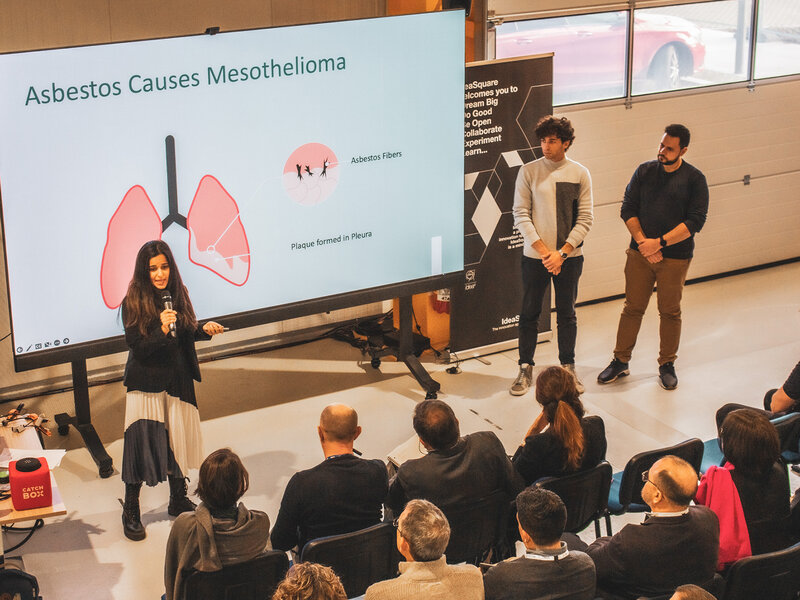
- Disruptive device to diagnose mesothelioma. The Manabe team devised a diagnostic device for mesothelioma – lung cancer induced by inhalation of asbestos fibres – intended for shipbreaking workers in Bangladesh. The solution combines diagnosis based on a hyperspectral analysis of pleural fluid using disruptive Attract technology along with an awareness programme about the problem, addressed to workers.
- Breath lung cancer detector. The Galilei team faced the challenge of detecting lung cancer in its early stages, taking into account the low survival rate when diagnosed based on symptoms. To do this, they proposed using a very sensitive technology developed with the help of the Attract programme called single-photon to detect lung cancer in breath, using specific biomarkers that are currently in the experimental phase.


You may be interested in:


