


Social Ecological Design
Regenerative Practices for Everyday Life
Turin
ENG
First Level Master Degree in Social Ecological Design
Language
English
Start date
November 2026
Frequency
Full time
Fruition
On campus
Duration
16 Months
Credits
80
Course Coordination
Michael Kaethler
Price
EU/EEA resident students: €20.300
Non‑EU/Non-EEA resident students: €22.300
How can design become a tool for care that fosters deep and respectful connections between humans, communities and ecosystems in the context of contemporary socio-ecological challenges?
For too long, design has unquestioningly served the whims of the market, dubious ideologies, or the empty promises of progress through technological change. The immersive and experimental Master’s degree in Social Ecological Design: Regenerative Practices for Everyday Life offers an urgent alternative. Through integrating critical theory with creative practice in real-world contexts, it develops pioneering approaches that foster deep and caring connections with the living and material world. The Master’s goes OUT THERE into real-world contexts and challenges, combining in-class learning with immersive fieldwork in contexts that span Sicily, Tuscany, and Piedmont (Turin and the Alps).
Through direct engagement with communities and ecosystems, students develop a versatile skill set – including biomimicry, multispecies thinking, cross-cultural communication, cultural ethnography, creative activism, systems analysis, inclusive design, and more—while working alongside local stakeholders, craftspeople, experts, and peers. This unique approach, rooted in DesignXCommons, nurtures the awareness that care for tangible and intangible commons emerges through design and equips students both to work closely with different actors and to engage with theories, methods, and tools for driving meaningful, regenerative, and constructive social and ecological transformation.
By creating the conditions and fostering the courage for new forms of social and ecological collaboration, the programme cultivates designers to confront today’s complex challenges and navigate uncertain futures. To do this, the programme focuses on getting OUT THERE, OUT of the classroom, OUT of conventional approaches and OUT of disciplinary limitations, to nurture new social and ecological alternatives.
The Master’s programme in Social Ecological Design is uniquely structured with a Scientific Committee —Michael Kaethler (Theory & Method), Anna Maria Orrù (Design Ecology), Zeno Franchini (Social Practice), Francesca Gattello (Social Practice) and Adrian Vickery Hill (Process Design). Each one contributes their unique expertise, experience, and professional network, enriching the program with a diverse array of insights, perspectives, and knowledge.
Information to decide
Design education has been slow to adapt to the urgent, interconnected crises we face today—including climate change, biodiversity loss, social inequalities, economic stratification, and the rise of artificial intelligence culture. In response, we have created this experimental and alternative Master’s programme. As an antidote to conventional design, the programme is grounded in socio-ecological interactions, entanglements, and relationships, exploring diverse psychological, embodied, and geographical landscapes. It equips designers with the theories, methods, and tools necessary for driving meaningful change.
In order to provide future design professionals with the tools that are required in everyday life, the curriculum moves between analysis, interpretation, and application of social and ecological design. Students step away from conventional academic frameworks to explore OUT-of-the-box ideas (first trimester), immerse themselves OUT in the field and OUT of their comfort zone (second trimester), and challenge themselves to be OUT on their own (third trimester).
The programme integrates a variety of learning methods, including lectures, workshops, fieldwork, site visits, individual projects, research, an internship, material explorations, and a thesis project. To ensure consistent support and personalized development, each student is paired with a dedicated mentor who provides guidance, insight, and feedback throughout the entire 16-month journey.
The programme is divided into three distinct phases:
First Trimester: Building Foundations
The first trimester is primarily based in Turin and focuses on equipping students with essential skills and knowledge needed to confront contemporary challenges. The curriculum covers key topics such as theories of social and ecological design, critical methodologies, working within complex cultural contexts, gender and identity, colonialism, nature-culture relations, transformative change, and post-growth alternatives.
Additionally, one week is dedicated to an immersive experience in the Alps, where students explore nature-culture methodologies in an off-grid ecological setting, fostering a deeper connection with the natural world.
Second Trimester: Practical Theory and Fieldwork
The second trimester balances theory with fieldwork and site visits. During this phase, students will engage first-hand with visual anthropology, creative ethnographies, attend workshops on alternative design approaches, participate in an urban studio in Turin, and spend two intensive weeks in Tuscany, working together in a nature-centered, small-scale farm and nature academy
Third Trimester: Field work, Thesis Project, Internship and Integration
The final trimester is dedicated to getting students OUT of the university and into their own professional practices. This phase begins with fieldwork in Sicily, followed by an internship and the development of the student’s thesis project. This trimester is an opportunity for students to expand their professional networks and collaborate with a diverse range of partners.
As a transdisciplinary programme, it fosters dialogue and collaboration across diverse ways of thinking and practicing, welcoming individuals from a variety of backgrounds and perspectives. The programme is open to students and professionals interested in social and ecological transformation, social justice, environmental advocacy, and social entrepreneurship, as well as to all those willing to experiment with new modes of thinking and practice. Students should have some experience (academic or in practice) with materially oriented or creative practices (design, art, crafts, theatre etc..) or have a strong interest in developing these.
Collaborative Learning Environment: You will work alongside leading scholars, innovative designers, and diverse local communities—both human and more-than-human—across southern, central, and northern Italy.
Immersive Fieldwork: You will directly engage with captivating and challenging real-world settings in Sicily, Tuscany, and Piedmont and through this immersive experience learn how design can have transformative agency.
Integrated Skill Development: You will gain both a strong theoretical foundation and practical design skills to address site-specific challenges in dynamic and contested environments and situations.
Hands-On Experience: You will collaborate with diverse communities learning how to navigate complex social, ecological, ethical, and political contexts to drive meaningful transformation.
Personalized Mentoring: You will benefit from expert guidance and mentoring throughout the 15-month programme from faculty with diverse trajectories of design experiences and expertise.
Transdisciplinary Partnerships: You will build connections with professionals across a wide range of sectors while working on collaborative projects with peers that prepare you for real-world situations post MA.
Diverse Career Opportunities: You will prepare for roles in a variety of sectors and practices such as product design and process innovation, public space design, humanitarian cooperation, social and ecological advocacy, biomimicry, design anthropology, education, social policy, etc…
Career-Ready Profile: You will graduate equipped to tackle complex challenges with an extensive skill set and professional network.

Syllabus
The program covers three main areas:
Theory and Methods
- Critical history of design
- Radical and critical design methodologies
- Artistic research methods
- High and low tech design methods
- Identity politics and design
- Systems of power and authority
- Practices of care and empathy
- Embodied methodologies
- Alterity, otherness, and hospitality
- Deep observation and direct perception
- Systems thinking, systems transformation
- Modalities of change and transformation
- World building and narrative production
- New materialism
- Alternative economies
Social Design Practice
- Community design
- Practices of care
- Territoriality and vernacular design
- Dialogical design
- Creative ethnography
- Decolonising design practices and non-Western cosmologies
- Process design
- Affirmative and transition design
- Stakeholder and end-user mapping
- Adversarial design
- Co-production and participatory design
- Systems design, network mapping
- Inclusive design
- Creative forms of social criticism and cultural protest
- Design poethics
Design Ecology
- Climate and eco-literacy
- Sustainability
- Regenerative and restorative design
- Circular design and life cycles
- Social ecology
- Ecosystem-driven and metabolic design
- Ecological anthropology
- Biomimicry, bioinspiration, biophilic design
- Multi-species and more-than-human ethnographies
- TEK Traditional ecological design
- Soil care, Agroecology and lifeworlds
- Ideology and environmentalism
- Environmental ethics
- Feminist political ecology
- Post-growth alternative models
Faculty


Course Coordinator
Michael Kaethler
Scientific Committee | Theory & Method

Anna Maria Orrù
Scientific Committee | Design Ecology

Francesca Gattello
Scientific Committee | Social Practice

Zeno Franchini
Scientific Committee | Social Practice

Adrian Vickery Hill
Scientific Committee | Process Design

Federica Natalia Rosati

Mauro Filippi

Alexandra D'Onofrio

Laurens Van der Cruyssen

David Liver

David Bassuk

Vivien Tauchmann

Gabriel Fontana

Lucia Babina

Fredrik Moberg

Brigida Marovelli

Jordan Valentin Lane

Bettina Schwalm

Emílio Brandão

Lorenzo Costanzo & Camilla Speriani

POST DISASTER

Leonardo Mastromauro

Andrea García Portolés

orizzontale

John Thackara
Guest Faculty

Morten Søndergaard
Faculty Poet

Jason HO
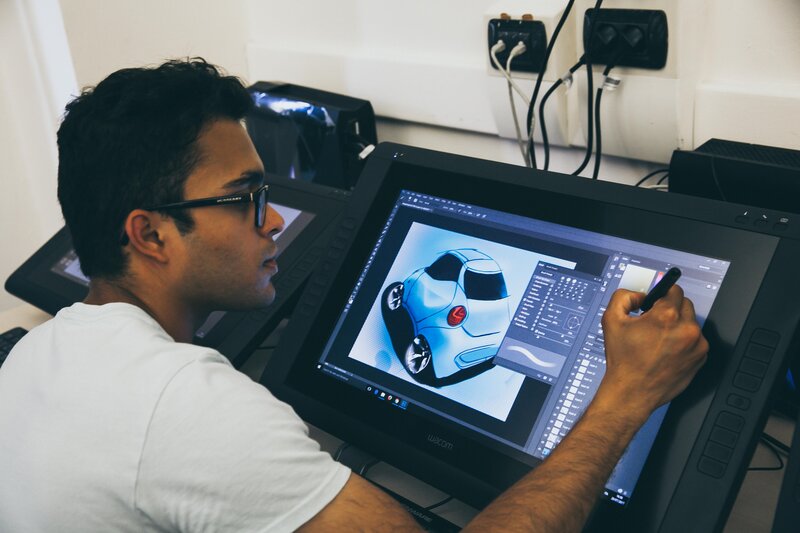
Inside the labs
+3
CINTIQ LAB
Course partner

You may be interested in:


News


Don't miss it


