


Interactive Media Design
Milan
ITA
First Level Academic Diploma in New Technologies of Arts - Specialization Media Design
Language
Italian
Start date
October 2027
Frequency
Full time
Fruition
On campus
Duration
3 Years
Credits
180 CFA / ECTS
Course Coordination
Lucia Cristiani
The Bachelor of Arts in Interactive Media Design at IED Milano combines technological innovation, creativity and interdisciplinarity, training professionals capable of developing interactive projects in the new media landscape. The programme includes coding, UI & UX, artificial intelligence and gamification, providing tools to design immersive and interactive digital experiences. The curriculum covers areas ranging from web and apps to exhibition spaces and interactive systems, always oriented towards the future of digital design.
Course structure and contents:
The IED programme spans three years, during which design is integrated with cultural knowledge, dialogue with professionals, technical skills and innovative tools.
First Year: Students learn fundamental tools for digital design, such as graphic and video editing software (Photoshop, Illustrator, Figma, Premiere), programming languages (HTML, CSS, JavaScript, Python) and the basics of artificial intelligence. At the same time, the study of semiotics, art history and film provides the cultural foundations for critical analysis of images and visual language.
Second Year: Dedicated to technical and design development, with particular focus on human-machine interaction, usability and user experience. Students work on complex projects in web communication and interactive environments, tackling the entire creative process from design to prototyping. The theoretical component explores the relationship between media, technologies and society, analysing the impact of digital interfaces on human experiences. Advanced tools are introduced for designing complex interfaces, 3D environments and interactive systems, fostering full operability in multidisciplinary contexts.
Third Year: Focused on consolidating skills and entering the professional world. Students design immersive and interactive environments, integrating artificial intelligence, machine learning and digital storytelling. The approach becomes autonomous and methodological, with strong emphasis on complete project management, from research to realisation, while theoretical subjects encourage critical reflection on the role of new technologies in contemporary communication.
The programme concludes with the thesis, a synthesis of acquired skills, through projects ranging from interactive installations and web apps to augmented reality experiences, gamification, smart home systems and immersive prototypes.
--

Faculty


Course Coordinator
Lucia Cristiani
Visual Artist and Academic Tutor

Davide Famoso
Entrepreneur and consultant

Paolo Solcia
Composer

Dario Gavezotti
Interaction Designer, system integrator, lecturer

Giacomo Cusano
Director of Education at Krisalide Institute, Freelance consultant

Franco Belluschi
Founder and president of Mediacom

Mauro Paffi
Motion Graphics Artist, Editor & Dop

Davide Corno
Marketing and communication manager

Ferrari Alessandro
Visual designer, illustrator, and musician

Lucci Maurizio
Media Designer

Lorenzo Sattin
Sound Designer, Dj, Producer

Andrea Valente
Author specializing in fiction, divulgation, and merchandising

Loredana Parmesani
Art Critic

Raffaele Solaini
Philosopher and semiotic expert

Scaravaggi Silvia
Art Curator and Writer

Luca Infante
Founder and Administrator of Mercurio Sas

Michele Manghi
Owner NAUTA scientific

Silvia Bernardi
Copywriter, content editor and lecturer

Sergio Messina
Musician, Radio Author, Teacher, Researcher

Ornella Mignone
Scenographer and Curator
Inside the labs
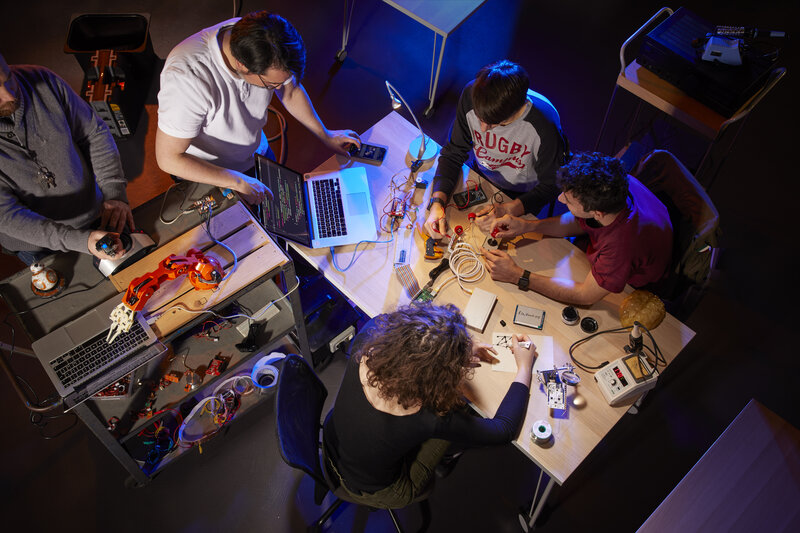
INTERACTIVE LAB
Projects


You may be interested in:


News


Don't miss it


