


Communication Design
Turin
ITA
First Level Academic Diploma in Communication Design
Language
Italian
Start date
October 2026
Frequency
Full time
Fruition
On campus
Duration
3 Years
Credits
180 CFA / ECTS
Course Coordination
Alessandro Bertin, Matteo Milaneschi, Damiano Gui
The Bachelor of ArtS in Communication Design at IED Torino combines the historical foundations of advertising with a constant focus on digital experimentation and emerging languages.
From the first year, students explore narrative and visual structures in communication, progressing through a flexible and personalised pathway that integrates creative disciplines – such as art direction, copywriting, and content design – with strategic skills in branding, marketing, events, and PR.
The programme’s methodological approach includes workshops, interdisciplinary projects, and a focus on new media, with particular attention to the evolution of visual languages and contemporary communication.
Structure and contents:
The IED programme spans three years, integrating design with cultural knowledge, dialogue with professionals, technical skill development, and the use of innovative tools.
Year One: Establishes common foundations for the entire class, introducing design and the main languages of communication. Theory and practice alternate to experiment with the creative process, from ideation to execution, with a focus on creative thinking and design process. Students learn graphic, vector, and interface design software (Photoshop, Illustrator, Figma) and are introduced to writing, drawing, computational thinking, and artificial intelligence. In parallel, courses in contemporary art history, visual culture, and media theory develop critical analysis skills for communication content.
Year Two: Addresses more complex topics and works on real briefs, expanding theoretical and practical skills. Theoretical background includes media evolution, technological impact, and contemporary cultural dynamics, while practice focuses on user experience, data visualisation, multimedia product development, and visual storytelling. Strategic aspects such as branding, event management, and digital communication are introduced, alongside workshops that enhance creativity and design skills. Students may also orient their pathway towards specific areas such as interaction, motion graphics, or writing.
Year Three: Students achieve greater project autonomy through market engagement, participation in competitions, and thesis development based on real briefs. Theoretical content becomes a tool for critical thinking and applied experimentation in fields such as artificial intelligence, customer experience, and marketing. An optional module is introduced, focusing on social strategies or immersive experiences. The second semester is dedicated to thesis development, carried out in groups and structured as a professional integrated project, including research, concept, strategy, graphic solutions, and prototypes.
The entire programme enables students to test their inclinations and gain awareness of future professional opportunities.

Faculty


Course Coordinator
Damiano Gui
Head of Experience Design at Havas CX

Taddeo Zacchini
Visual Designer

Elena Actis

Roberto Bernocchi

Giorgia Mannavola
Co-founder - Studio PEPE fotografia

Giulia Ricciardi

Bernardo Follini
Curator - Fondazione Sandretto Re Rebaudengo

Diego Fontana

Fabiola Nardecchia
UX Director at Jam3
Inside the labs
+3
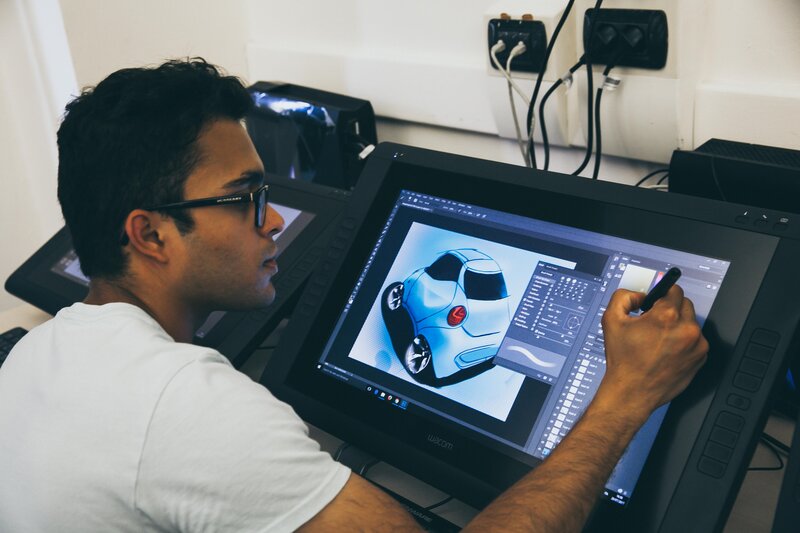
CINTIQ LAB
Projects


You may be interested in:


News


Don't miss it


