
Design
Course for transforming materials into contemporary objects and systems, in relation to the environment and community
Accademia Aldo Galli
ITA
First Level Academic Diploma in Design - Specialization in Product Design
Language
Italian
Start date
October 2027
Frequency
Full time
Fruition
On campus
Duration
3 Years
Credits
180
Course Coordination
Luca Prandoni
Learn to design products, artefacts and systems that express new ways of experiencing the world, experimenting with the First Level Academic Diploma in Design at the Como Academy.
We shape professionals able to work in equilibrium with art, design, technique and intuition to transform materials and stories into experiences, building solutions that know how to dialogue with people and the environment.
The work stems from listening and observation: you will learn research methods and critical tools to read contexts, needs and desires, and to shape ideas in a responsible way. The design methodology accompanies students from their first year through to their thesis, growing in complexity and depth, and focusing on territories, communities, resources and life cycles. Designing today means knowing how to apply ecological and circular strategies, imagining solutions for regenerating ecosystems and social fabrics through new economies.
Alongside critical thinking is the know-how practicality: great attention is paid to materials knowledge, transformation technologies and the production processes necessary to make every idea feasible. Material becomes a means of expression: it is experimented, modelled and explored for learning to recognize the limits and possibilities to transform ideas into concrete projects.
The course leads to the development of professional skills that combine imagination, reality, responsibility, feasibility, poetry and function. Students tackle projects involving product design, staging, craft design and material experimentation, while learning to communicate and disseminate their work in a comprehensive, informed and effective manner.
Qualification awarded
First Level Academic Diploma – EQF6 / ISCED6 level.
Credits
The course grants 180 CFA (Academic Credits), corresponding to 180 ECTS (European Credit Transfer and Accumulation System).

Luca Prandoni
Course Coordinator Bachelor in Design
Information to decide
The course shape designers capable of transforming materials, processes and relationships into credible, contemporary projects aimed towards a more sustainable future.
The program integrates cultural, methodological and technical skills in contemporary design, focusing on the relationship between design, ecosystem and social dimension. Attention to materials and production processes becomes a key for understanding the environmental, economic and cultural implications of every design choice.
Instruction takes place mainly through workshops and projects designed in collaboration with companies, artisans, professional studios, museums, cultural institutions and research centers. This direct interaction with real-world partners allows students to immediately engage with the dynamics of the workplace and build a network of relationships and skills that will be of tangible value for their future careers.
The three-year program is divided into six semesters. It guides students through a progressive and structured growth process: it takes from observation and research to concept definition to the development of models, prototypes, communication strategies and professional positioning.
First year
Cultural and methodological foundations of the project are established. Students acquire the fundamental tools for understanding the design process. They develop an initial awareness of materials and ecosystems that help them to learn how to represent ideas and activate research methods. The aim is to develop a critical eye and bring out an initial design identity.
Second year
The work focuses on more complex projects, developed in dialogue with real interlocutors and with particular attention to supply chains, contexts and production systems. Students consolidate their design autonomy, learn to choose materials and processes in a motivated way and to work according to circular and regenerative logic.
Third year
The course tackles advanced levels of complexity. Students integrate advanced design, prototyping and communication tools, leading to the definition of their professional identity. The Thesis Project represents the synthesis of the course: a mature and coherent work, capable of expressing a personal and credible vision.
Intensive workshops and interdisciplinary activities reinforce a cross-disciplinary approach based on dialogue between arts, technology and ecological practices.
The First Level Academic Diploma in Design is designed for curious young people who feel the need to immerse themselves in the reality that surrounds them and then improve it through design.
It’s a course for those who want to understand how to transform their creative drive into a career, for those who question their surroundings, for those who want to imagine a more inclusive future that is attentive to people and respectful of the environment.
It is aimed at those who want to give shape to their ideas, combining critical thinking, sensitivity and practical skills. It is for those who see design as a tool for creating relationships, collaborating and communicating with local areas and communities, helping to build better living environments.
The course is open to students from any secondary school - high schools, technical or vocational institutes - and does not require any prior knowledge. The course accompanies each student in discovering their own way of designing, helping them to transform their interests, curiosity and insights into concrete skills and a solid and credible profession.
Because it allows you to train as a designer and author capable of transforming observations, questions and visions into concrete projects that can improve your own or other social contexts, combining personal sensitivity and collective responsibility.
Because it focuses on materials as a means of expression and knowledge: not simply as technical support, but as a place for research, experience and relationships. By working directly with materials, you learn to understand their behavior, limitations and possibilities, developing awareness of what you produce and the impact that every choice has on the environment and people.
Because the project is born and grows in real contexts: territories, communities, resources and production chains. You work on issues that are essential for today's world of work - circular economy, sustainability, regeneration - addressing them as concrete needs and not as mere statements of principle.
As a plus, it helps you build a tailor-made professional profile, starting from who you are and what you want to be. The course allows you to experiment with different areas of design - from product to exhibition design, from research to project communication - to understand where is your best fit into the world of work and how to make your profile recognizable, structured and authentic.
Syllabus
First Year
Learn to observe, listen to and interpret the world around you with method and sensitivity, developing a solid visual culture and an initial critical awareness. Explore the fundamentals of representation, modelling and transformation, both physical and digital, experimenting with the transition from idea to prototype.
HISTORY OF CONTEMPORARY ART
DESIGN METHODOLOGY
HISTORY OF DESIGN
MODELLING
DIGITAL IMAGE PROCESSING
APPLIED ARTS AND MATERIAL TYPOLOGY 1
DIGITAL MODELLING TECHNIQUES – 3D COMPUTERS
DESIGN 1
THEORY OF PERCEPTION AND PSYCHOLOGY OF FORM
MATERIALS TECHNIQUES
Additional training activities 1
Second Year
Explore the relationship between materials, production techniques and the environment, working in real-world contexts. Address issues such as circularity, regeneration and social responsibility, developing autonomy, decision-making skills and a more informed design vision. Experiment with materials and discover your means of expression.
APPLIED ARTS AND MATERIAL TYPOLOGY 2
TECHNICAL AND DESIGN DRAWING
DESIGN 2
ECODESIGN 1
PROJECT CULTURE
PRODUCT DESIGN
LANGUAGES OF CONTEMPORARY ART
CULTURAL ANTHROPOLOGY
CERAMIC TECHNIQUES
CONTEMPORARY PLASTIC TECHNIQUES
Elective courses
Additional training activities 2
Third Year
The third year is dedicated to the full development of your project, defining your vision independently and effectively. Your thesis represents the synthesis of your method and identity, preparing you for the world of work with a clear professional positioning.
DESIGN 3
ECODESIGN 2
LAYOUT AND VISUALISATION TECHNIQUES
EXHIBITION DESIGN
AESTHETICS
PROFESSIONAL DESIGN
DECORATION TECHNIQUES AND TECHNOLOGIES
ENGLISH
Elective courses
Additional training activities 3
THESIS PROJECT


Inside the labs


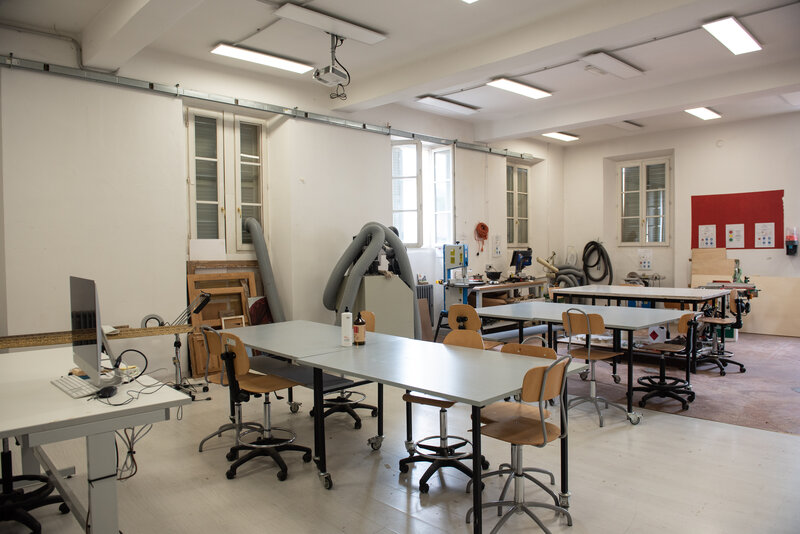
+2
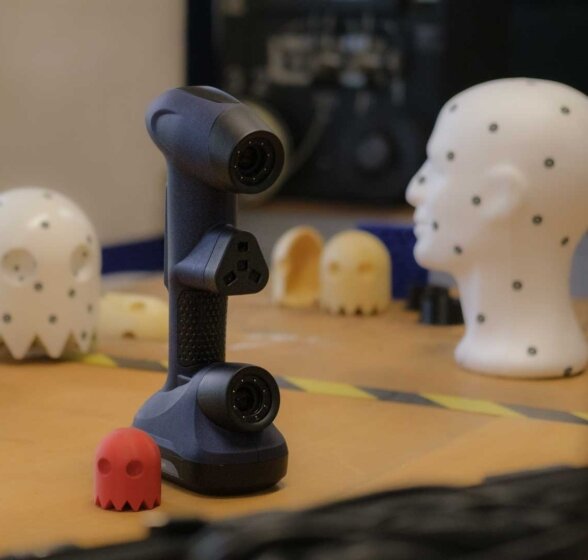
+4
SCANNER LASER 3D - G-SCAN

You may be interested in:


News


Don't miss it


