
Graphic Design and Art Direction
Turin
ITA
Bachelor of Arts in Visual Communication Design - Specialization Graphic Design and Art Direction
Language
Italian
Start date
October 2027
Frequency
Full time
Fruition
On campus
Duration
3 Years
Credits
180 CFA / ECTS
Course Coordination
Andrea Viberti, Nicola Bertelloni
The Graphic Design and Art Direction programme at IED Torino trains visual designers who are aware of the ethical and social responsibility of visual communication in the contemporary era, through a multidisciplinary approach that integrates research and design experimentation.
The programme aims to develop versatile professionals, true polymaths capable of expanding their cultural, practical, and theoretical knowledge in order to translate complex concepts into coherent, distinctive, and effective visual systems, bridging analogue and emerging digital technologies.
The course explores analysis, ideation, and creative direction, alongside the ability to coordinate processes and teams, preparing graduates to work in the fields of corporate and product communication, branding, editorial design, fashion, and the creative industries. Particular attention is given to different media languages, cultural heritage enhancement, and cultural marketing.
Course structure and contents:
The IED educational pathway is structured over three years, during which design practice is integrated with the acquisition of cultural knowledge, dialogue with industry professionals, the development of technical and strategic competences, and the use of innovative, industry-standard tools.
The first year is dedicated to understanding the creative process and the foundations of visual language. Students explore the relationships between text, form, colour, and meaning, while acquiring technical skills in the use of professional software (including the Adobe suite: Photoshop, Illustrator, and InDesign) and learning the theoretical tools that support visual design practice.
The second year focuses on consolidating skills and further defining students’ professional identities. The design approach becomes more structured and team-oriented, with particular emphasis on research, prototyping, and the management of complex projects.
Students deepen their knowledge of editorial design, digital communication, and information graphics, developing the ability to tackle articulated projects within professional contexts.
In the third year, the focus shifts towards design autonomy and professional integration through the development of complex projects, including exhibition design systems, information design (ranging from long-form formats to more sophisticated multimedia platforms), and branding design (from house journals to comprehensive corporate communication systems).
Students engage with real clients, from multinational corporations to local businesses, further refining their presentation, management, and project coordination skills.
The programme concludes with a group thesis project, developed throughout the entire second semester, which serves as a synthesis of the knowledge and competences acquired during the course.

Faculty


Course Coordinator
Andrea Viberti
Founder and Creative Director of Hellobarrio

Course Coordinator
Nicola Bertelloni
Frontend Developer at Fastloop

Giacomo Traldi
Graphic Designer and Art Director of the digital magazine LINK

Giovanni Cavalleri
Graphic designer, editor of Quanto and 70 Percent magazines

Marco Caffaro
Owner Stamperia Inchiostro Puro

Olga Gambari
Independent curator, critic, and journalist

Giulia Boccarossa
Graphic and Exhibition Designer

Marco Ruffino
Partner studio lamatilde, Designer

Valerio Di Mario
Graphic e Motion Designer

Federico Antonini
Art director and book collector

Manuel Bortoletti
Information Designer specializing in visual storytelling

Walter Molteni
Creative director

Federica Borgato
Independent photographer and director

Francesco Danesi della Sala
Multidisciplinary Researcher
Inside the labs
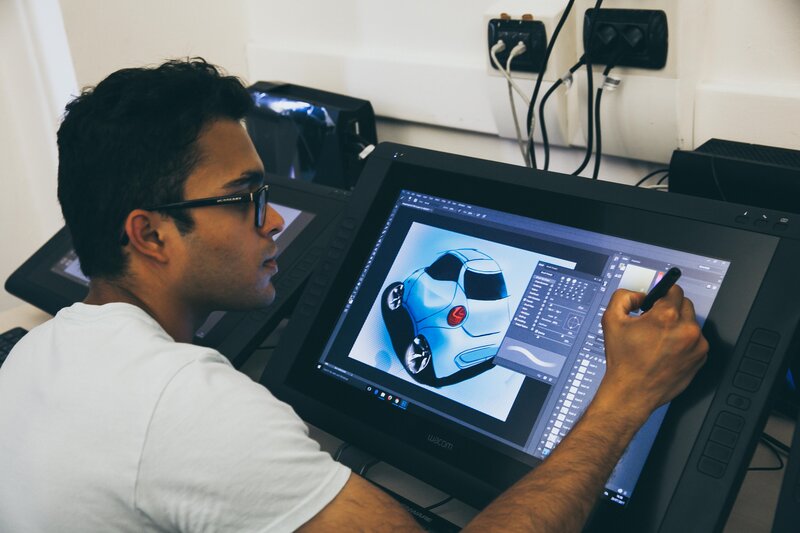
+3
CINTIQ LAB
Projects


You may be interested in:


News


Don't miss it


IED OPEN DAY
THE FUTURE IS LOOKING FOR YOU
November 2026 | Online and On campus